


Not every process is ready for an AI agent, and building one too early wastes budget and weakens trust in the whole project. This checklist helps CEOs and revenue leaders spot which processes will pay back and which need fixing first.
The question usually stems from a board meeting. A competitor has announced an agent that qualifies new enquiries overnight, a supplier has demonstrated one that drafts proposals from call notes, and someone asks why the business is still doing all of this by hand. Within a fortnight, there is a budget line and a team keen to start building.
The pressure behind that question is real. In McKinsey’s 2026 State of AI survey, the share of organisations with more than $1 billion in revenue that are scaling AI agents in one or more functions rose from 27% to 40% in a single year, while adoption among smaller organisations stayed essentially flat at 22%. For most ambitious businesses, that gap is why the question is being asked now. Larger competitors are moving agents into everyday work, and boards want to know the business is keeping pace.
The harder question is which process to start with, because readiness is a property of each process. A business can have one workflow that would suit an agent tomorrow and three that would quietly fail, and the difference rarely shows until money has been spent. An agent built on a process that is not ready costs more than its budget, because the first failure shapes how the whole business feels about the next project.
This checklist splits the signals into those that mean an agent will pay back and those that mean the process needs work first, then shows you how to test one process in about ten minutes. If you want a wider view of what agents can do across sales, marketing and service, read our guide to 12 AI agents for revenue teams.
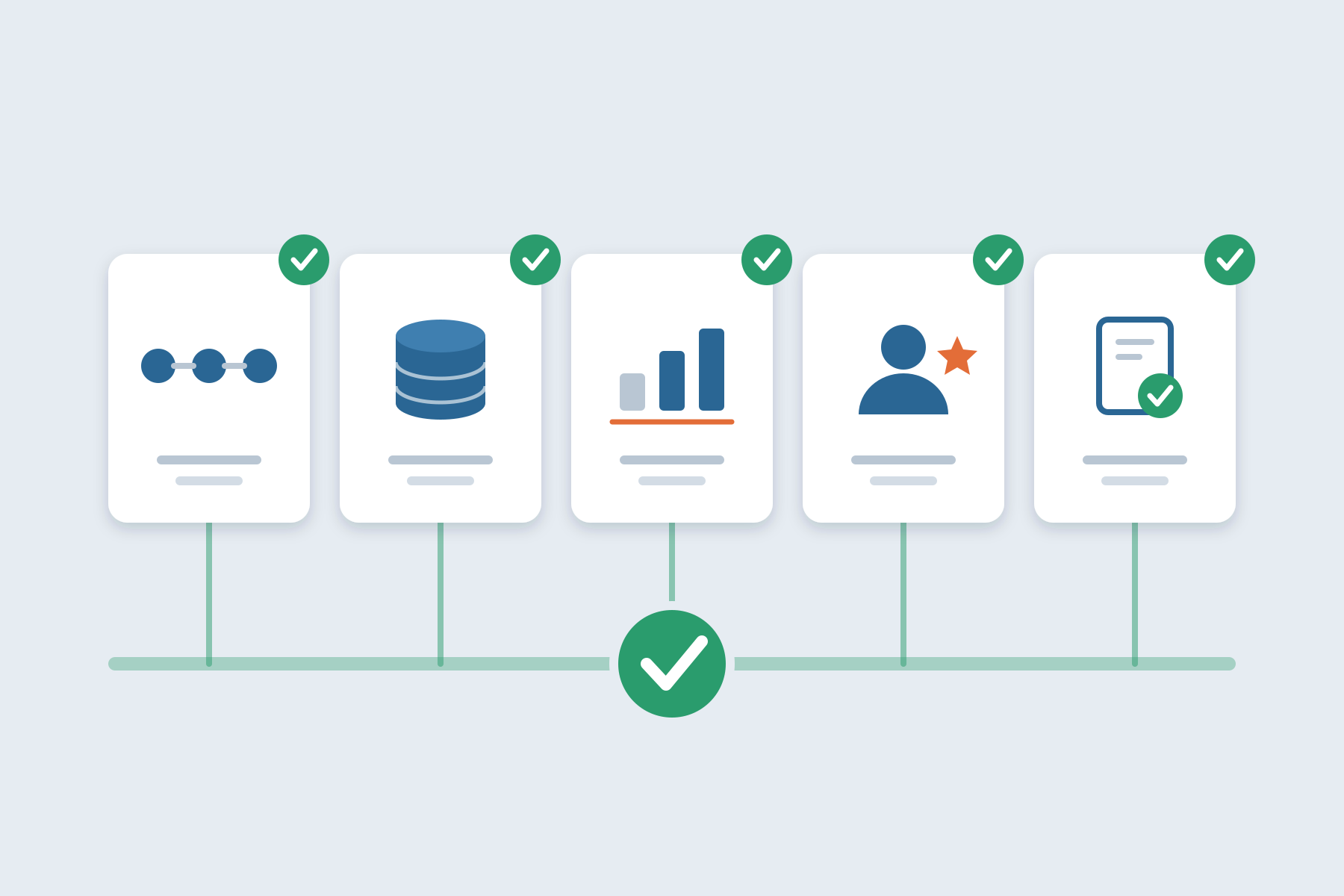
Five Signals That an Agent Will Pay Back
When these five are in place, an agent has a clear job, the information to do it and someone who is accountable for the result.
1. The Process Follows Roughly the Same Steps Each Time
Think about how a new enquiry moves from your website form to a sales conversation. If the route is the same whoever handles it (check the company, match it to a service line, score it against your ideal customer and pass it to the right person), the process has a shape an agent can follow. Variation in the inputs is fine, since every enquiry is different, but the steps themselves need to be consistent.
This matters because the most controllable agents work through a defined sequence. We start with deterministic agents, where each agent receives a specific input, performs one limited task and passes a structured, repeatable output to the next step. That design is far easier to test and correct than an agent given an open goal and left to decide its own route, and it depends on the process having a standardised route to follow.
2. The Data Sits in Systems the Agent Can Reach
An agent can only use what it can read. If the information needed for the task lives in your CRM, your finance system or a shared knowledge base that can be connected, the agent has something to work with. If it lives in a spreadsheet on one person’s laptop, it has nothing.
The strongest position is a single source of truth, one place where the whole customer journey is recorded and kept current. We connect agents to the system of record a business already uses and avoid building a separate store of data for the agent, because a second copy of the truth is a second system to keep accurate.
3. You Can Put a Cost on It Today
If you can say roughly how many hours a week the process takes, how long a customer waits for a reply or how many enquiries go unanswered, you have a baseline to measure the agent against. Without one, the business case rests on a feeling, and the verdict on the agent will too.
The few organisations that attribute 5% or more of their earnings to AI stand out on this point. McKinsey found they were twice as likely as others to say they have defined processes to measure the impact of their AI initiatives[CW1] . Measuring the process before the agent is built is the easiest form of that discipline, and it gives you an honest answer about whether the build was worth it.
4. Someone Owns the Process
Ask who would notice first if this process broke tomorrow. If there is an obvious answer, that person is the owner, and they are the one who can say whether the agent is doing the job properly. An agent without an owner tends to drift, because nobody is responsible for deciding when its output is good enough or when its rules need to be improved. The owner does not need to be technical, only to know the process well and have the authority to change it.
5. A Named Person Reviews the Result
Every agent should have a point where a person checks the output before it reaches a customer or changes a record that matters, certainly at the start. That person needs a name, time in their week to do it and the authority to stop the agent if something looks wrong. This could be the same person who owns the process or someone else, depending on your team structure.
The review point is also how autonomy is earned. We build agents with approval steps in place and widen what they can do on their own as the results show they can be trusted, one task at a time. A business that cannot name the reviewer is not yet ready to hand over the work.
Four Signals the Process Needs Fixing First
Gartner predicts that over 40% of agentic AI projects will be cancelled by the end of 2027, citing escalating costs, unclear business value and inadequate risk controls. Each of those reasons usually traces back to a process problem that existed before the agent did. The four signals below are the most common, and each is cheaper to fix in the process than in the agent.
Steps Differ From Person to Person
Ask three people how they handle the same task and listen for three different answers. One account manager checks the contract first, another checks the last invoice and a third relies on what they remember about the client. An agent cannot copy all three, and choosing one at random hard-codes a preference nobody agreed.
The fix is to agree a single version of the process and write it down. That conversation often surfaces improvements worth having whether or not an agent follows.
Information Lives in People’s Heads and Inboxes
Some of the most valuable knowledge in a business is never written down, such as the salesperson who knows a client prefers a phone conversation to an email, or the operations lead who knows which supplier always runs late. If the process depends on that knowledge and it lives only in someone’s memory or inbox, an agent will make decisions without it and get them wrong in ways that are hard to spot.
The fix is to move the knowledge that matters into a shared system, as fields, notes or documented rules, so people and agents work from the same information. As a rule of thumb, if your team cannot see the full picture of a customer, the agent cannot either.
Nobody Has Agreed What a Good Outcome Looks Like
“Qualify the lead” sounds like a clear instruction until sales and marketing disagree about what a qualified lead is. If the people running a process cannot agree on what good looks like, the agent will be judged against different standards depending on who is looking, and it will fail.
Agree the definition in writing before any build begins. A good definition is specific enough that two people would score the same output the same way, and it becomes the test the agent is held to once it is live.
The Data Is Duplicated or Out of Date
Picture a customer recorded three times in your CRM, once for each of its web domains, with no link between the records. A person would recognise the same business, whereas an agent reading those records sees three separate companies, each with a partial history, and acts on whichever one it finds first. Out-of-date knowledge creates the same risk, because an agent that draws on an old price list or a retired policy document will apply it with complete confidence.
The fix is a focused data clean on the records the process depends on, with clear rules about where each piece of information lives and who keeps it current. It rarely needs to cover the whole database.
Ready or Fix First at a Glance
Use this table to score any process against the nine signals above, grouped into six rows.
|
Signal |
Ready to build |
Fix first |
|
Process steps |
Roughly the same steps each time |
Steps differ by person |
|
Data access |
Held in systems the agent can connect to |
Held in heads, inboxes or personal files |
|
Ownership |
A clear owner with authority to change the process |
No obvious owner |
|
Success measure |
A good outcome is agreed and today’s cost is known |
No shared view of a good outcome |
|
Data quality |
One current record per customer |
Duplicated or out of date |
|
Review |
A named person checks the output |
Nobody has the time or authority to check |
Test One Process in Ten Minutes
You can apply the checklist to a single process in about ten minutes, ideally with the person who knows it best.
Step one, two minutes. Pick one process with a clear start and end, such as the journey from an enquiry arriving to a salesperson receiving it.
Step two, three minutes. Walk through the last five times it happened. Note who handled it, which systems they opened and where they relied on memory or an email thread.
Step three, three minutes. Score the process against the six rows of the table, marking each one ready or fix first.
Step four, two minutes. Decide. Five or six ready means it is worth scoping an agent. Three or more marked fix first means improving the process comes first. Anything in between means closing the gaps, which are usually small, and running the test again.
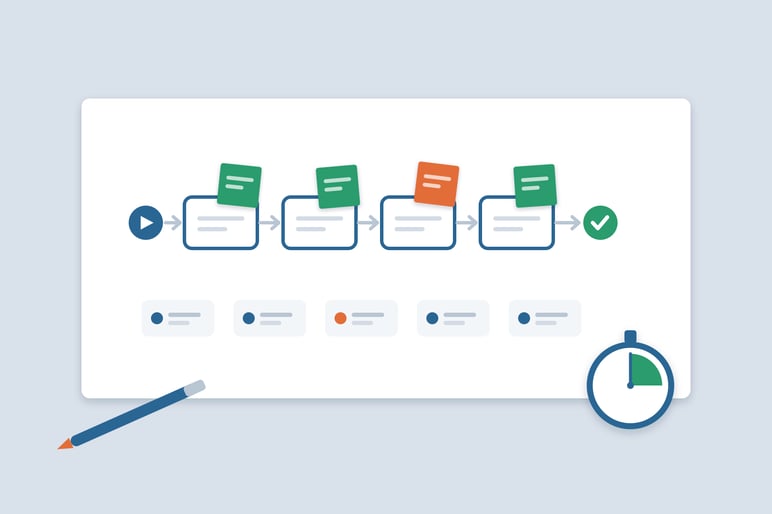
Here is an example of what this might look like in practice. A commercial director at a professional services firm runs the test on inbound enquiry handling. The steps are consistent and every enquiry arrives through one web form into the CRM, so the first two rows score as ready. The director owns the process and, from the last month of records, the team estimates that enquiries wait most of a working day for a reply, which gives a baseline. A sales coordinator already checks routing each morning, so the review row is ready too.
The data row fails, because past clients appear more than once under different email domains. Five ready and one fix first means a targeted clean of company records comes next, followed by scoping an agent that scores and routes enquiries with the coordinator approving its decisions.
Your Next Steps
If the Process Is Ready
Scope before you build. Write down the inputs the agent receives, the output it produces, the systems it reads from and writes to, the point where a person reviews the result and the measure that will show whether it worked. That scope is often a page long, and it is the document that keeps the build focused.
Then start small. A deterministic agent doing one narrow task inside the process, connected to the system of record you already use, gives you results you can check quickly. As the reviewer gains confidence, widen what the agent handles on its own. Autonomy is something an agent earns from evidence, and the review point is where that evidence is gathered.
If the Process Needs Fixing First
Treat the fix as the first stage of the agent project, with its own owner and deadline. Agree the steps, move the knowledge that matters into shared systems, define a good outcome and clean the records the process uses. Much of this work pays back on its own, because a documented, measured process is easier to manage and hand over whether or not an agent ever runs it.
Then run the ten-minute test again. A process that moves from fix first to ready has usually been improved along the way, and the agent built on it starts from firmer ground.
If you are unsure where to begin, three questions narrow the field.
- Which process costs the most time or revenue today?
- Which of those has a clear owner?
- Which runs on data you trust?
Frequently Asked Questions
A few questions leaders often ask when weighing up their first agent.
What Is the Difference Between an AI Agent and Automation?
Traditional automation follows fixed rules written in advance. An agent can interpret information, such as an email or a document, and decide which step to take within limits you set. Deterministic agents combine that ability to interpret with a fixed sequence of steps, and our page on deterministic AI agents explains how they work.
Should Our First Agent Be Deterministic or Autonomous?
For most businesses, we recommend starting with a deterministic agent. It is easier to test, audit and correct, and it lets the business build trust before giving an agent more freedom.
Do We Need Perfect Data Before We Build an Agent?
You need the data the specific process depends on to be accurate, current and in one place, and the rest of the database can wait. A focused clean of the relevant records is usually enough, and our data hygiene for AI readiness service covers what that involves.
Can We Buy an Agent Off the Shelf Instead?
Sometimes, and for common tasks, an off-the-shelf agent can be the right answer. Check the product carefully, though, because Gartner estimates that only about 130 of the thousands of agentic AI vendors offer genuine agents. The checklist applies either way, since a bought agent still depends on your process and your data. Our AI agents as a service page explains how we build and run custom agents.
How Do We Choose Which Process to Start With?
Start where the ten-minute test scores well and the cost today is highest. If several processes compete, an AI Opportunities Audit ranks them by business impact, ease of implementation and expected return.
Who Should Own an Agent Once It Is Live?
The person who owns the process it supports. Technical colleagues maintain the connections, while the process owner decides whether the output is good enough and when the rules need to change.
Sources
McKinsey, The State of AI in 2026, August 2026
Gartner, Gartner Predicts Over 40% of Agentic AI Projects Will Be Canceled by End of 2027, June 2025