


-1.png?width=772&height=434&name=image-gen%20(1)-1.png)
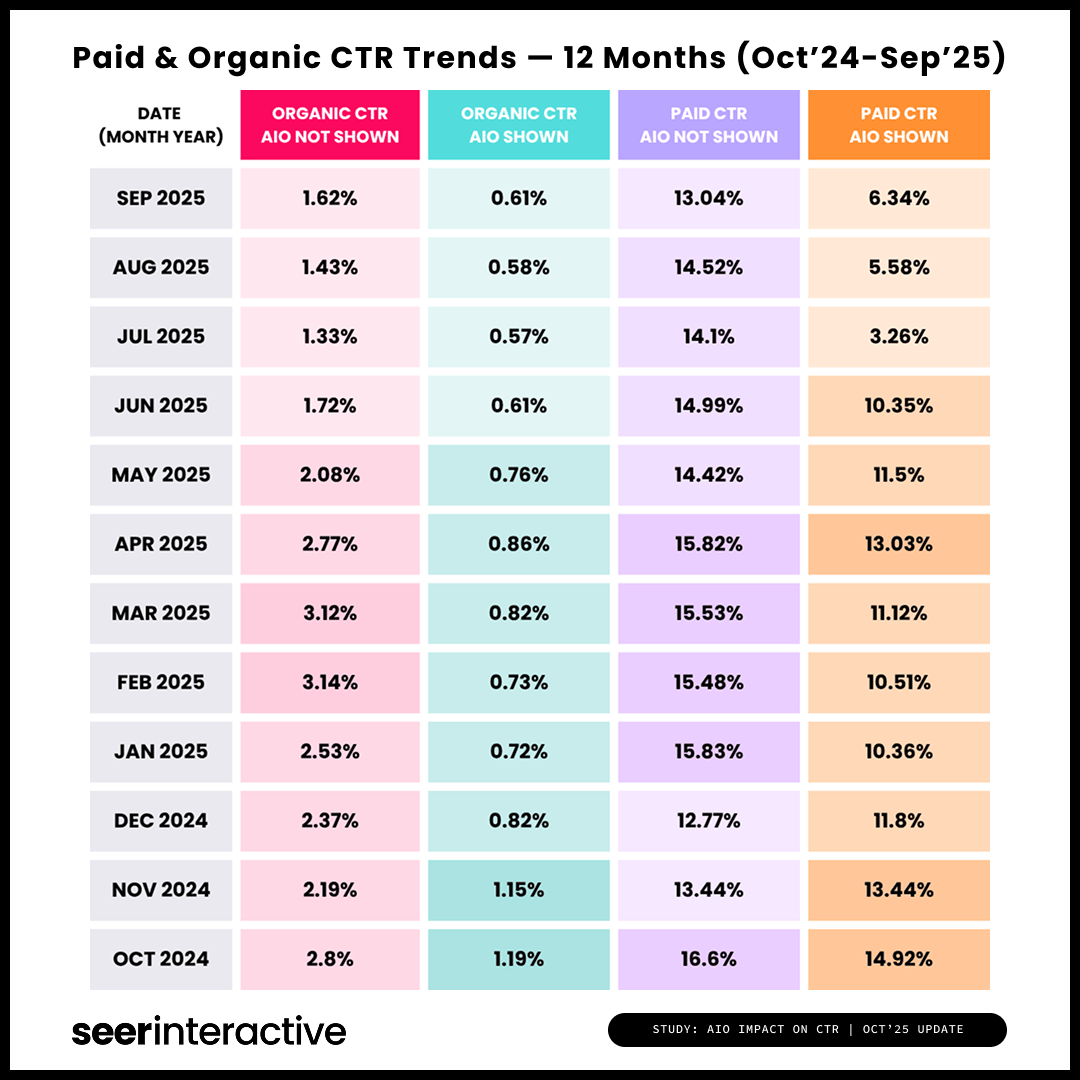
A 61% drop in organic click-through rates. Paid campaign performance falling by more than two-thirds. Website traffic from search queries that once reliably delivered pipeline; simply vanishing. These are not projections or worst-case scenarios. For marketing and sales leaders across the UK and beyond, this was the reality of 2025.
The cause was not a Google penalty or an algorithm update in the traditional sense. It was something more fundamental: artificial intelligence changed how buyers find, evaluate and choose suppliers. Search engines began answering questions directly, often without sending visitors anywhere at all. The rules that governed digital marketing for two decades started to break down.
For revenue leaders, this shift demands a difficult but necessary response. The metrics that once defined success; rankings, traffic, impressions; no longer tell the full story. The strategies that built pipeline in previous years may actively underperform this year. And the organisations that delay adapting risk ceding ground to competitors who move faster. As Kantar's Marketing Trends report makes clear, the businesses that recognised this shift early and acted decisively are already pulling ahead.
This guide examines the most significant digital marketing developments of 2025 and provides practical, evidence-based guidance for marketing and sales leaders preparing for what comes next.
1. The AI Search Disruption
AI search has moved from experimentation to mainstream adoption. The introduction and rapid expansion of AI-generated answers within search engines has dramatically altered user behaviour and reduced the visibility of traditional organic and paid listings.
Source: Search Engine Land
In 2025, organic click-through rates declined by 61% when AI-generated summaries appeared, while paid performance for the same queries also fell significantly. At the same time, zero-click searches accelerated, meaning users increasingly received answers without visiting websites at all. According to Search Engine Journal, some publishers reported CTR drops of up to 89% when AI Overviews appeared for their content.
Crucially, brands referenced or cited within AI-generated responses performed significantly better than those that were not. Visibility within AI answers, rather than ranking position alone, became the defining factor of search success.
For a deeper understanding of how these changes affect your tracking capabilities, see our article on Google's removal of key SEO tracking features.
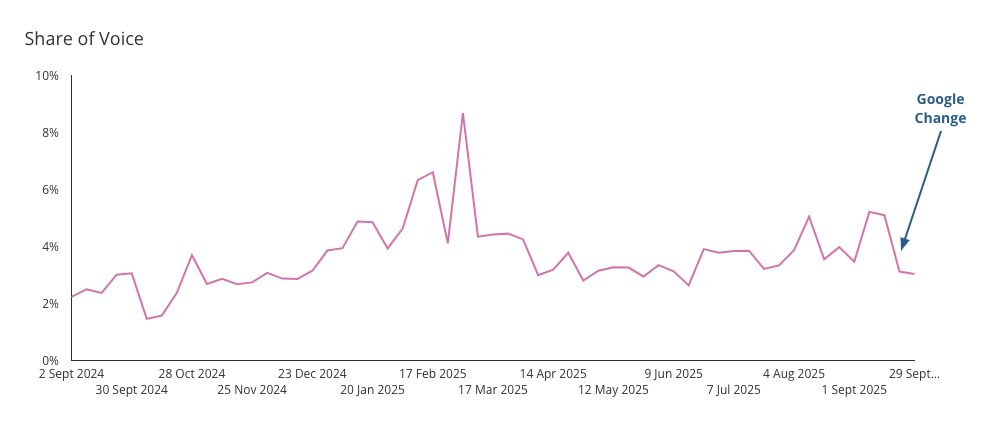
Source: Anonymised share of voice data from Ahrefs
Key findings
- Organic and paid click-through rates dropped substantially when AI Overviews appeared
- Zero-click searches rose sharply as users consumed answers directly in search interfaces
- AI-generated answers now reach a global audience measured in billions of users
- Brands cited within AI responses achieved higher downstream engagement and trust
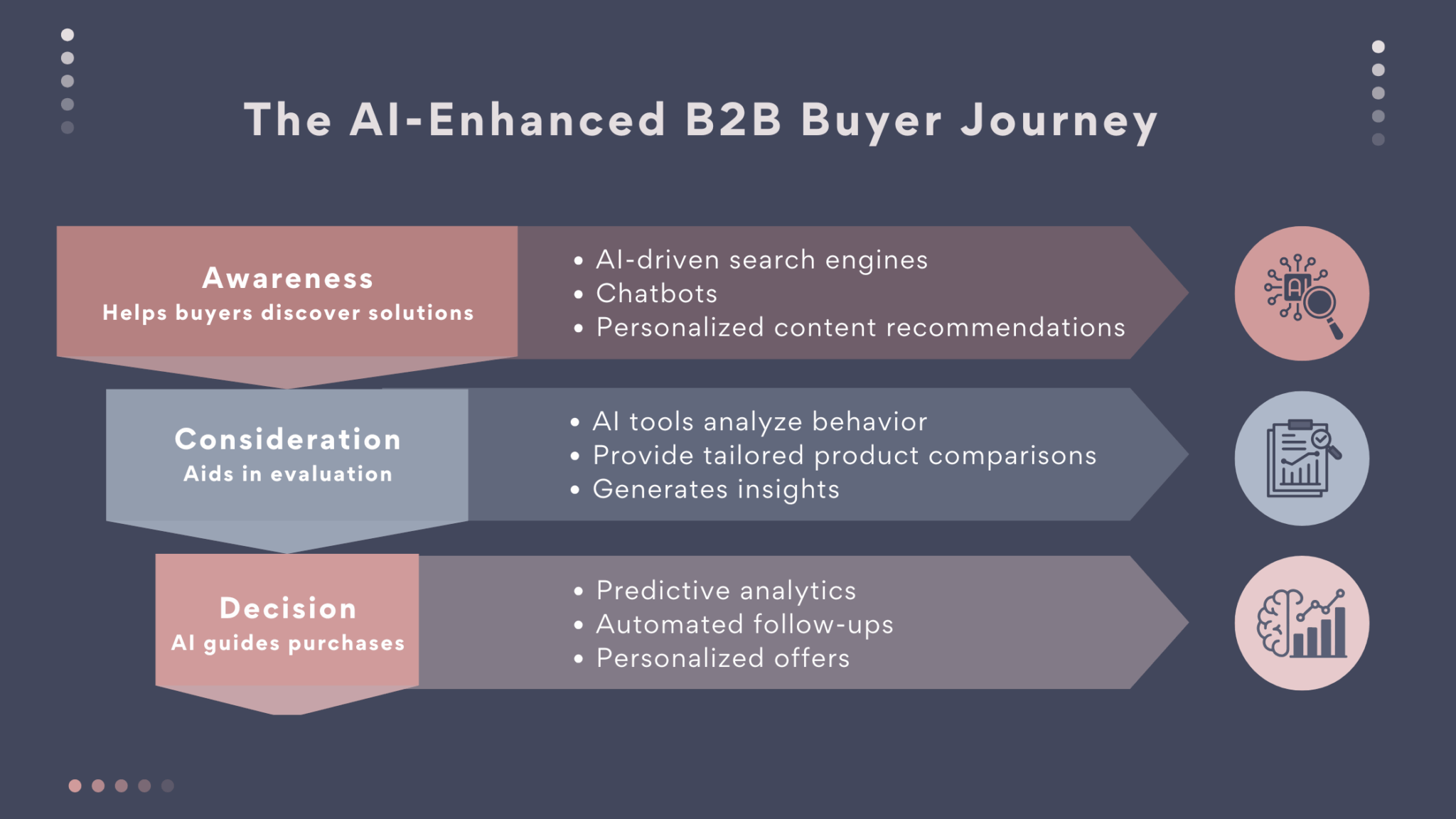
- A growing proportion of users now treat conversational AI tools as search engines
Source: MarTech
Guidelines for revenue leaders
- Shift success metrics away from traffic volume towards visibility and share of voice
- Prioritise being referenced and cited within AI-generated answers
- Track AI visibility and citation frequency as core performance indicators
Understanding the scale of disruption is essential, but how should marketing teams actually adapt their content strategy to thrive in this new environment? The answer lies in a discipline that barely existed eighteen months ago…
2. Generative Engine Optimisation (GEO)
As AI systems increasingly mediate discovery, Generative Engine Optimisation (GEO) emerged as a necessary evolution of traditional SEO. Rather than optimising purely for ranking algorithms, GEO focuses on structuring content so AI systems can interpret, trust and reference it. For revenue leaders looking to understand this shift in detail, our resource on AEO vs GEO: Navigating the Future of SEO provides essential context.
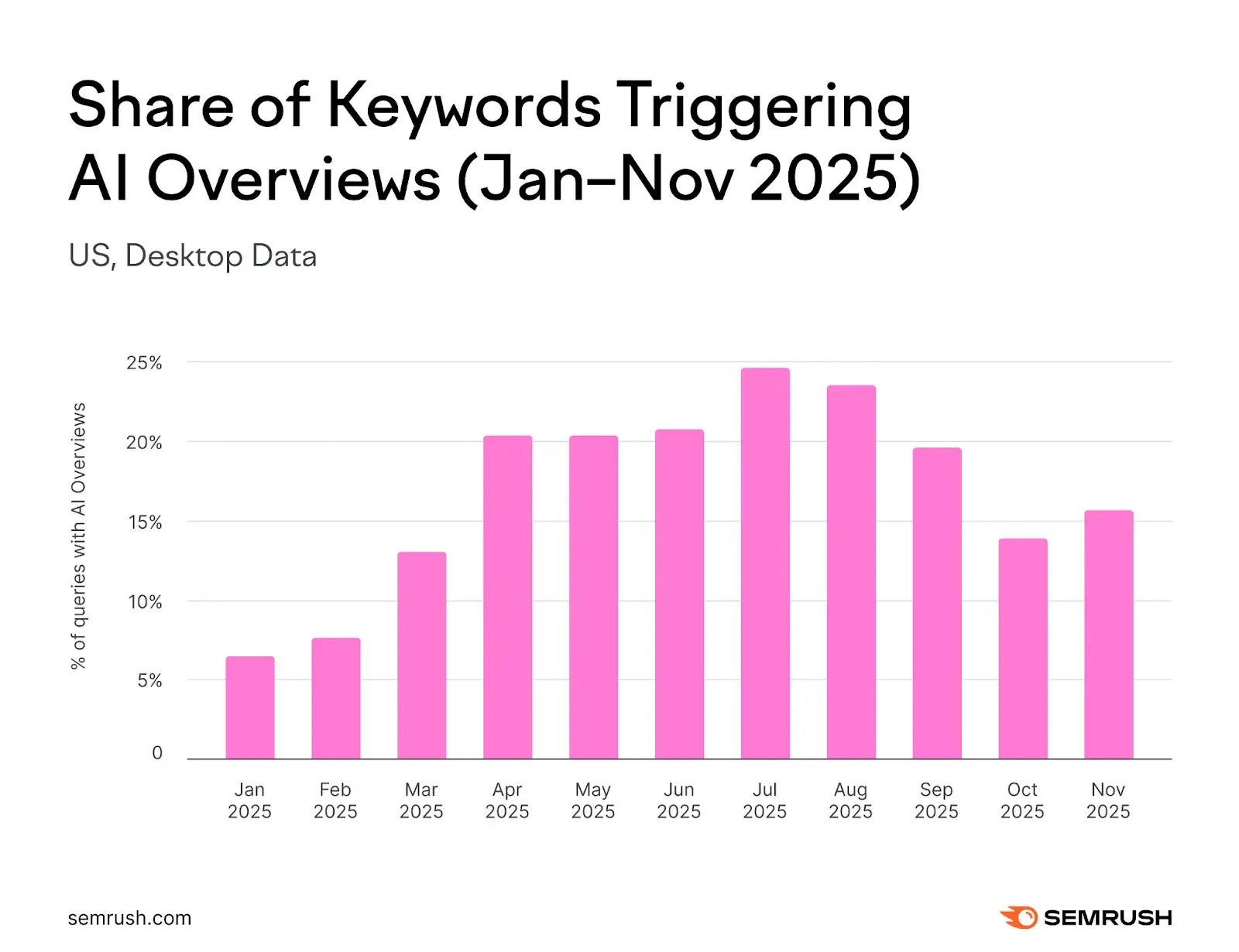
In practice, this has raised the bar for quality. Experience, expertise, authoritativeness and trustworthiness (E-E-A-T) are now more important than ever, particularly as AI models actively evaluate source credibility before citing content. Research from Semrush's AI Overviews Study confirms that E-E-A-T signals strongly influence which sources AI systems choose to reference.
Source: Semrush
Unlike traditional rankings, AI citations proved volatile throughout 2025. Content referenced one month could be replaced the next, requiring a more disciplined approach to maintenance and authority-building.
Key findings
- GEO became essential alongside traditional SEO
- E-E-A-T signals strongly influenced AI citation decisions
- AI-cited pages changed more frequently than organic rankings
- Optimisation increasingly focused on large language models and multimodal search
Guidelines for revenue leaders
- Structure content with clear definitions, summaries and logical explanations
- Demonstrate real-world expertise and transparent sourcing
- Maintain and refresh evergreen content to retain AI relevance
- Use consistent language and naming across all owned assets
Optimising for AI discovery is only part of the picture. Equally significant is how AI is transforming the internal operations of marketing teams themselves, and why getting this balance right separates high-performing organisations from the rest.
3. AI as a Core Marketing Tool
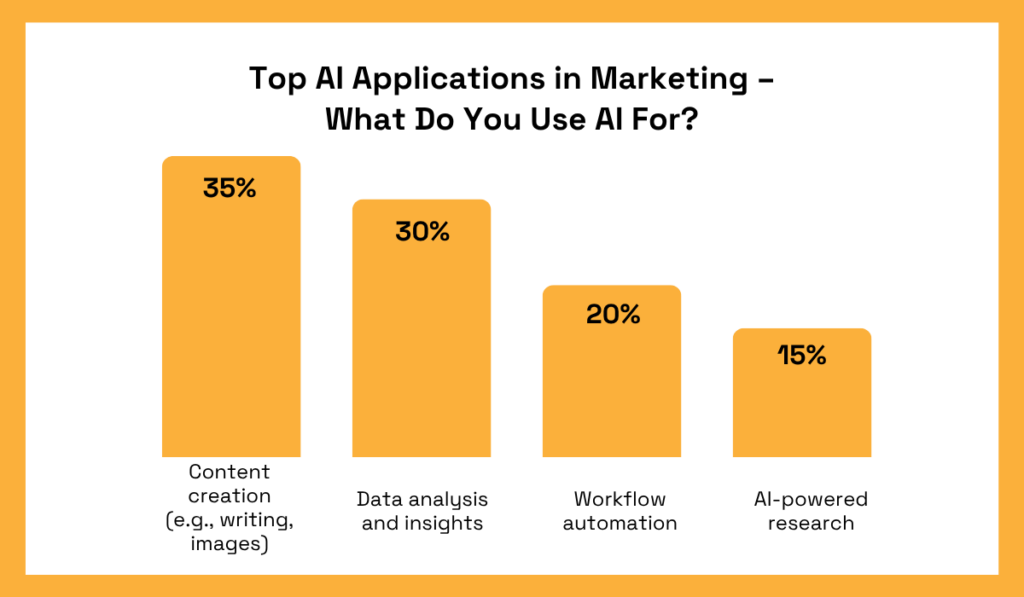
By the end of 2025, AI was no longer optional within marketing teams. According to the HubSpot State of Marketing Report, the top AI applications in marketing were content creation (35%), data analysis and insights (30%), workflow automation (20%), and AI-powered research (15%). However, widespread adoption also introduced a new challenge: AI fatigue.
Source: Veridon
The most successful organisations did not attempt to replace people with AI. Instead, they adopted an 'AI-forward' approach, using technology to amplify human judgement, creativity and strategic thinking. This hybrid model, explored in depth in the Deloitte Tech Trends 2026 report, consistently outperformed both pure AI and fully manual approaches.
For more on this hybrid approach, listen to our Revenue Rewired podcast on extracting value from your tech stack.
Buyers also became more discerning. While AI-assisted content became ubiquitous, audiences responded best where human insight and editorial oversight remained visible. As WordStream's analysis notes, 50% of consumers can now spot AI-generated content, and 52% are less engaged when they suspect AI authorship without human input.
Businesses that delay AI adoption risk falling behind competitors who are already scaling their capabilities. Our article on the hidden costs of AI inaction explores what this means for revenue leaders.
Key findings
- AI adoption in marketing became near-universal
- Content creation, analytics and automation-led use cases
- Audiences could increasingly detect purely AI-generated content
- Human-led, AI-supported workflows delivered the strongest results
Guidelines for revenue leaders
- Use AI to enhance human capabilities, not replace them
- Ensure all AI-generated outputs are reviewed and refined
- Start with repeatable tasks such as drafting, reporting and analysis
- Develop custom AI tools trained on your brand and processes
While AI reshapes how marketing teams operate, an equally profound shift is changing how and where B2B buyers conduct their research and make purchasing decisions. Social platforms, once dismissed as consumer-only channels, have become serious commercial environments.
4. Social Commerce Becomes Commercial
Social platforms evolved rapidly in 2025, enabling complete buying journeys without users leaving the app. Discovery, validation and purchase increasingly happened in one place, particularly among younger decision-makers. Marketing Week's analysis of B2B trends highlights how this shift is affecting even traditionally conservative B2B sectors. Research from Grand View Horizon reiterates this growth of the B2B social commerce market, where it’s expected to grow to 3 trillion USD in 2030.

Source: Grand View Horizon
For B2B brands, this meant social channels could no longer be treated solely as awareness tools. Practical demonstrations, proof points and clear value propositions became essential to driving measurable outcomes. The Salesforce State of Marketing report confirms that organisations treating social as a revenue channel significantly outperformed those using it purely for brand awareness.
LinkedIn, in particular, strengthened its position as the dominant B2B social commerce platform. Enhanced algorithm prioritisation of thought leadership content, improved lead generation forms, and deeper CRM integrations made the platform increasingly central to enterprise sales processes. Businesses that invested in consistent executive presence and employee advocacy programmes saw measurably stronger pipeline contribution from social channels.
The shift extended beyond LinkedIn. YouTube emerged as a critical mid-funnel asset for B2B organisations, with product demonstrations, customer testimonials, and educational content directly influencing purchasing decisions. Video content now plays a role in the majority of B2B buying journeys, with prospects frequently consulting video reviews and demonstrations before engaging sales teams.
AI Chris
AI also transformed influencer marketing within B2B contexts. Platforms introduced AI-powered tools to help brands identify relevant industry voices and predict campaign performance. The emphasis shifted from follower counts to genuine expertise and audience engagement quality. For scale-up businesses, this created opportunities to partner with niche industry experts whose audiences, while smaller, demonstrated significantly higher purchase intent.
Perhaps most significantly, the line between social content and commerce continued to blur. Native purchasing features, integrated booking systems, and seamless handoffs to sales conversations reduced friction throughout the buyer journey. Organisations that aligned their social presence with their CRM and marketing automation systems gained clearer attribution and more actionable insights.
Key findings
- LinkedIn consolidated its position as the primary B2B social commerce platform
- YouTube became essential mid-funnel content for complex B2B purchases
- AI-powered influencer identification improved B2B partnership outcomes
- Native commerce features reduced friction between discovery and purchase
- Social-CRM integration enabled clearer revenue attribution
Guidelines for revenue leaders
- Treat social channels as revenue-generating platforms, not just awareness tools
- Invest in executive thought leadership and employee advocacy programmes
- Create video content that addresses specific stages of the buyer journey
- Integrate social platforms with CRM systems for clearer attribution
- Optimise social profiles for search and discovery
As social platforms capture more of the buyer journey, one asset becomes increasingly valuable: the customer data you own directly. With third-party tracking in decline, first-party data has moved from 'nice to have' to a strategic imperative.
5. Privacy and the Rise of First-Party Data
As third-party tracking continued to decline, first-party data became one of the most valuable strategic assets for revenue leaders. Organisations that invested early in direct relationships, owned audiences and CRM integration gained a clear advantage. McKinsey's marketing insights emphasise that the modern rethinking of marketing's core increasingly centres on owned data and direct customer relationships.
AI played a critical role in enriching and activating this data, enabling more relevant personalisation without compromising trust or compliance. For organisations looking to maximise their first-party data, our complete guide to personalisation in marketing provides practical frameworks.
Key findings
- First-party data became a critical competitive differentiator
- AI enrichment enabled deeper insights without compromising privacy
- Direct customer relationships grew in strategic importance
- Owned channels delivered more reliable, attributable results
Guidelines for revenue leaders
- Prioritise first-party data from owned channels
- Use AI to enrich and segment customer insights
- Strengthen email, website and community engagement
The trends outlined above are not isolated developments; they represent interconnected shifts in how buyers behave and how successful organisations respond. The question for revenue leaders is no longer whether to adapt, but how quickly and how decisively.
6. Priorities for 2026
Looking ahead, the organisations best positioned for growth will be those that align marketing strategy with how buyers now behave, not how channels used to work.
The priorities are clear:
- Optimise for AI visibility and citation, not just rankings - focus on becoming the authoritative source that AI systems cite and reference
- Build hybrid AI-human workflows - use AI to scale efficiency whilst maintaining human expertise that builds trust
- Strengthen first-party data - owned data from email, CRM and direct relationships is more valuable than ever
- Measure what matters - track visibility, citation frequency, share of voice and revenue impact
- Stay adaptable - test new approaches and keep strategy aligned with how customers actually behave
The businesses winning in 2026 will not be those who simply understood these trends; they will be those who acted on them first. Insight without execution is just overhead.
Our AI Opportunities Audit gives revenue leaders a concrete roadmap: where to focus, what to prioritise, and how to move from insight to measurable revenue impact. Whether you need to optimise for AI visibility, build more effective hybrid workflows, or unlock the value in your existing technology, the Audit provides clarity on your highest-impact opportunities and the practical steps to capture them.
The ground is shifting. The question is whether you will shape that change or be shaped by it.