

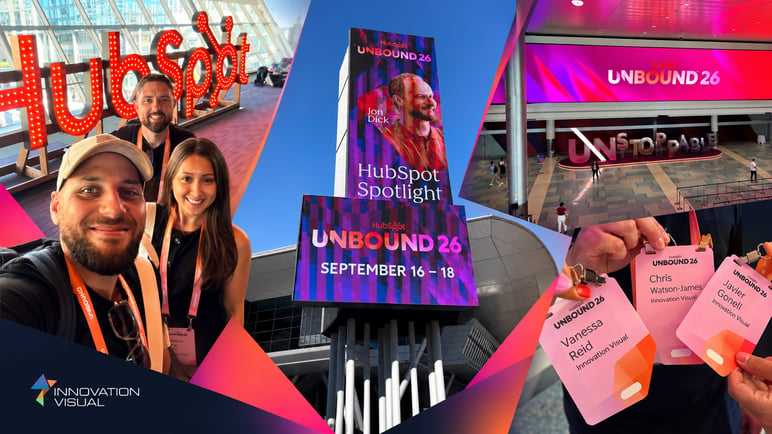
HubSpot's annual conference opened in Boston this morning and, for the first time in its history, it isn't called Inbound. The rename to Unbound isn't a cosmetic exercise. Inbound was a methodology HubSpot invented, built a company around, and gave its conference name to for well over a decade. Retiring it says something fairly blunt: HubSpot no longer sees inbound marketing as the organising idea behind how businesses grow.
What replaces it is this year's theme: Growth Context, and a set of announcements that all pull in the same direction. Here's what HubSpot has announced, and more importantly, what it means for you.
Growth Context: HubSpot Is Now an Agentic Customer Platform
HubSpot is repositioning itself as an Agentic Customer Platform, built in three distinct layers:
- The context layer: customer context, business context and team context. Everything the platform knows.
- The action layer: agents, Breeze Assistant and the Hubs. Everything the platform does.
- The coordination layer: agent management, connected systems and unified governance. Everything that keeps the first two in order once you're running more than one agent.
The argument underneath this is HubSpot's answer to an awkward question: why buy AI from your CRM vendor rather than bolting a specialist tool onto the side? Their case is that an agent is only ever as good as the context it can reach, and HubSpot owns the context. Ideation, execution and oversight all sit on top of what your CRM already knows about your customers, your pipeline and your team.
It's a persuasive argument. It also highlights something fundamental for all HubSpot users; you will only be able to unlock the power of HubSpot’s AI features if your context layer (your data) is in good shape to begin with.
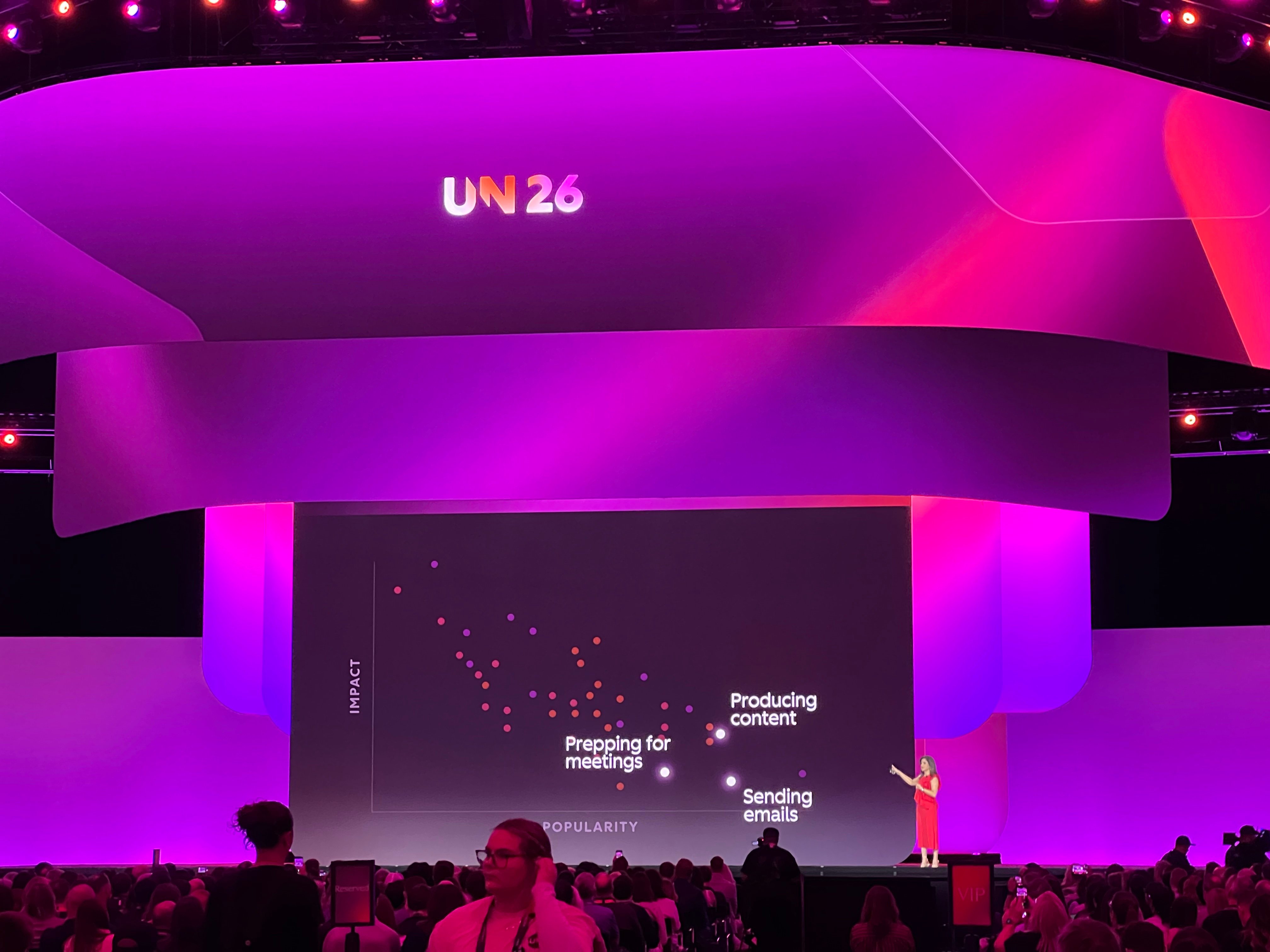
Marketing Studio 2.0: The Flagship Rebuild
Marketing Studio 2.0 is one of HubSpot's headline announcements, and it's worth being straight about what it is: a relaunch. The original shipped in 2024 and whilst it did offer marketers a collaborative space to plan and execute campaigns, it didn’t provide an end-to-end solution that marketers really wanted. This version, has been rebuilt from scratch to enable native agentic actions and streamline marketers’ daily workflows.
They are positioning it as a command centre for the entire campaign lifecycle: ideation, build, automation, launch, and reporting in one place, rather than stitched across five tools. Sitting inside it are three agents designed to work as a chain:
- Campaign Agent handles ideation, drawing on your CRM data including how your previous campaigns performed. You collaborate with it conversationally, feeding in context like call transcripts, and shape a campaign through natural language alone.
- Content Agent then produces the assets; emails, landing pages, social posts and pulls in recommendations from HubSpot's AEO tooling so content is built for how people search now, not five years ago.
- Nurture Agent personalises outbound email for each individual recipient using CRM data, with send-time optimisation and contact-level research into intent and engagement.
One of the key features is that you can now build automated workflows inside Marketing Studio using nothing but a natural language prompt. Workflow building has always been the point where campaign work stops being a marketing job and starts being an ops job. Removing that boundary changes who on your team can actually ship a campaign.
We have published a dedicated piece on this, featuring one of our own clients Stacy Jones from Hollywood Branded who is on stage at Unbound talking through how they've used the new Campaign Agent in practice.
HubSpot Work: A Workspace for Teams and AI Agents to collaborate
Almost everything at Unbound this year is an evolution of something existing. HubSpot Work is the exception, and it's an ambitious one.
It's a shared workspace where your team and your AI agents organise, complete and automate work together. HubSpot are positioning it squarely against productivity tools like Asana and Monday. You can use AI to generate project tables, documents, custom forms and automations; pull in live CRM data, including links to other objects; view work as project tables or calendars; and build agents that execute tasks directly inside the workspace. This is the action layer applied to your team's own operations rather than to your customers.
It's also worth noting what HubSpot Work is not: it doesn't replace the Projects Object launched at last year's Inbound. The two are intended to coexist.
Agent Hub: Coordination Made Concrete
Agent Hub launched back in July and has been improving steadily since. HubSpot's ambition is for it to become the command centre for every agent running in your portal. In other words, the coordination layer for your agentic team.
HubSpot is including the ability to migrate eligible existing workflows straight into Agent Builder, so you can add agentic capability to automation you've already built rather than starting from a blank page.
HubSpot are also explicitly targeting teams currently running processes through external middleware options like N8N or Make and have added capabilities like webhook triggers from external tools to make those flows potentially migratable into Agent Builder.
HubSpot is coming for the automation stack that sits outside your portal. If you've accumulated a patchwork of automation platforms over the past few years, and most growing businesses have, the question this raises is whether you still need them or whether HubSpot can consolidate more of your GTM stack into your existing portal.
Breeze Assistant: Everywhere, and More Capable
Breeze Assistant, HubSpot's ever-present AI assistant, gets a substantial capability upgrade: more autonomy to actually do work rather than suggest it, better context understanding, more connections to external tools, and the ability to create projects, retain memory across sessions and produce artifacts.
Breeze Assistant is also now in HubSpot's mobile app, which moves it from something your team uses at a desk to something a rep uses in a car park between meetings. That tends to be where assistants either become habitual or get forgotten.
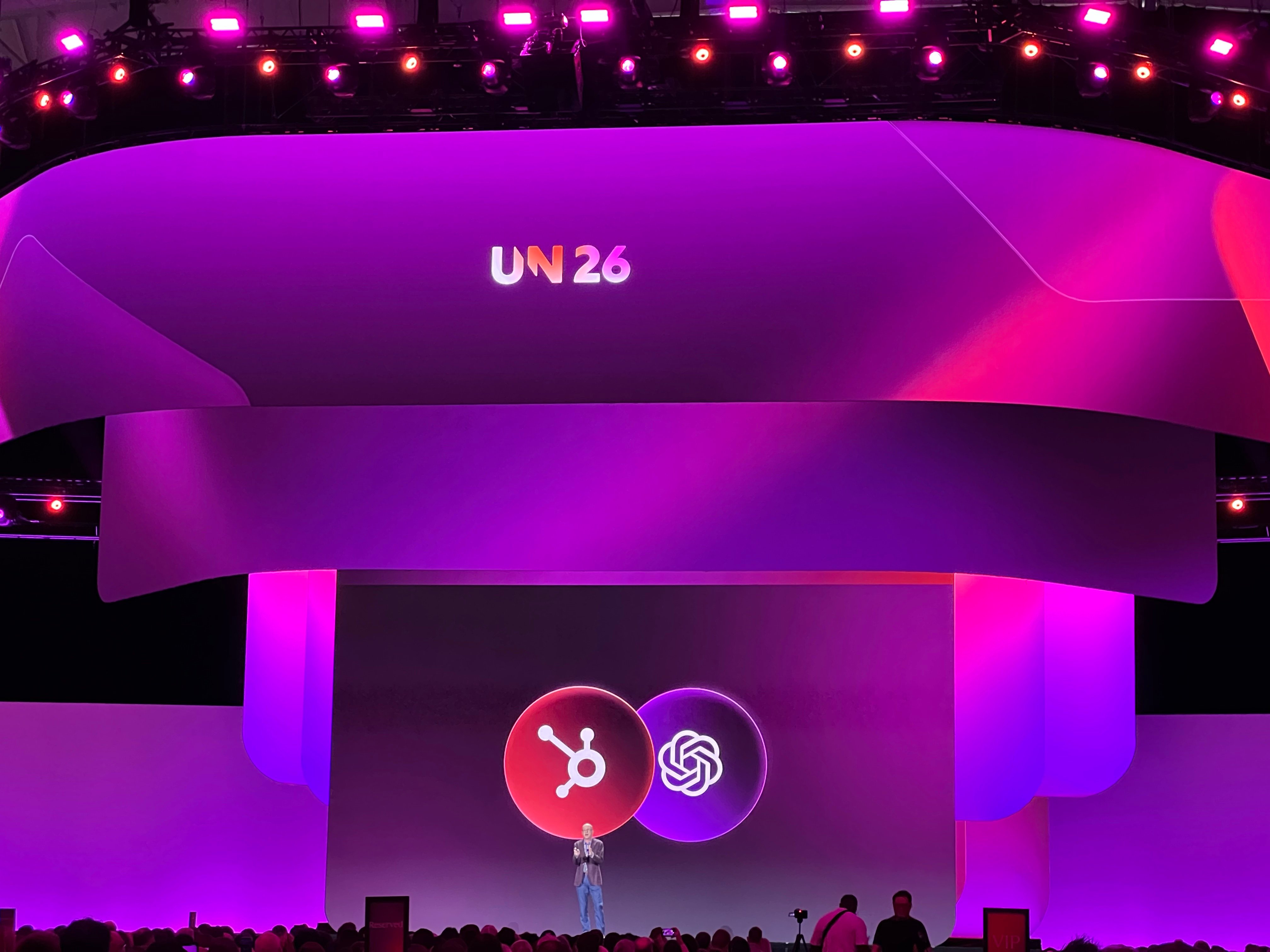
HubSpot Is Now the First CRM Built Into ChatGPT
Alongside the agent announcements, HubSpot has also become the first CRM to integrate directly with ChatGPT, both for advertising and for working inside ChatGPT itself. Businesses can now run ChatGPT Ads from within HubSpot, with campaign reporting sitting next to your other ad networks, and the connector lets you pull CRM data into ChatGPT to draft follow-ups, check deal status and analyse closed-won deals without switching tools.
It's a small but telling move. HubSpot isn't just building agents inside its own product, it's making sure your CRM data shows up wherever your buyers are already asking questions, including inside ChatGPT itself.
Winning Deals: Three Context-Driven Sales Agents
On the sales side, three announcements built on the same context-layer premise.
The one to pay attention to is Revenue Agent, which chases unpaid invoices for you; reading replies from contacts and automatically rescheduling chaser emails based on what those replies actually say. It's an agent doing an unambiguously commercial job with a measurable outcome attached, which is rarer than the marketing around AI agents suggests.
Alongside it, Deal Progression monitors emails, calls and meetings across a deal and generates the required follow-ups: emails, quotes and more. Meanwhile Agent Builder picks up an expanding set of sales use cases including demo flows, pipeline review and targeted outreach.
What This Means for You
Step back from the individual launches and one pattern runs through all of them. HubSpot is pulling work that currently happens in other tools, campaign planning, project management, external automation, into your HubSpot portal, and making agents the interface you use to do it.
For businesses already committed to HubSpot, that's an appealing proposition: fewer integrations to maintain, fewer places for data to go stale, one system of record. For everyone else, it raises a real strategic question about consolidation that's worth considering.
But whether any of it works for you comes down to the current state of your data.
Revenue Leaders: Your Context Layer Is the Part HubSpot Can't Fix
The action and coordination layers are HubSpot's to build, and they've built a lot of them this week. The context layer is yours.
Every agent announced at Unbound draws on your CRM data to do its job. An agent working from incomplete records, inconsistent properties and half-abandoned pipelines won't produce mediocre results; it will produce confident, fluent, scaled-up versions of your data quality problems. Agentic tooling doesn't paper over a messy portal. It amplifies the issues within your data