

For as long as we've been building websites, a good one has been judged on these three questions:
- Does it look right?
- Does it load quickly?
- Does a person land on it and find what they came for?
And yes, those questions still matter, but they no longer tell the whole story. A growing share of buyer journeys now begin with an AI assistant reading your website before any human does.
Someone asks ChatGPT, Claude, Perplexity or Google's AI Overviews a question, and the answer they get back is assembled from the sources those engines can read, trust and summarise. If your site is built only for the human eye, it can be close to invisible at the exact moment a buyer is forming a shortlist.
This is the change worth understanding, because the evidence is already clear. In Gartner's May 2026 buyers research across more than 600 buyers, 45% said they used generative AI during a recent purchase, mostly to research vendors and products, and buyers drew on an average of seven different information sources before they decided. The first of those sources is increasingly an AI engine, and what it says about you is shaped entirely by what it can read on and around your site.
Your Website Now Has Two Types of Readers
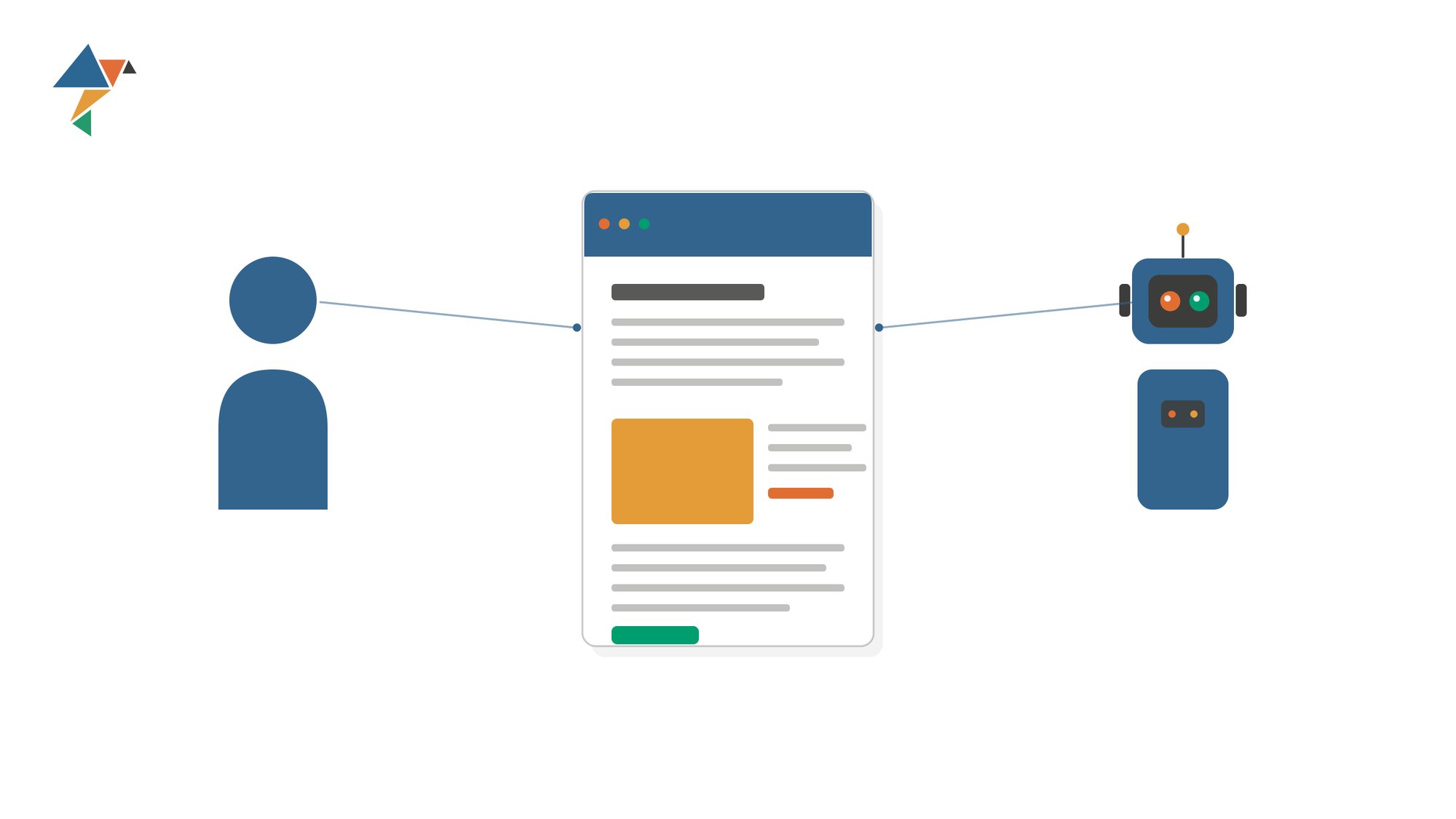
Your site has always had one audience, the people visiting it. It now has two. The first is the AI engine that reaches the page, parses it, works out what it means and decides whether to cite it. The second is the human who arrives afterwards, often having already been pointed your way, or not, by that first reader.
The two read your site completely differently.
A person scans visually, follows design cues and tolerates a bit of clever interactivity. An engine reads structure, looks for clear answers it can lift, checks whether the business behind the site is well defined and consistent across the web, and moves on fast if the page is slow or the meaning is buried. A site that performs beautifully for people and poorly for engines is now only doing half its job.
What "Built for Humans Only" Actually Looks Like
The symptoms are rarely obvious from the front end. A site can look modern and convert reasonably well for the traffic it already gets, while failing to surface in AI answers at all. The common patterns are easy to miss in a normal design review:
- Content locked inside interactive elements or images that an engine cannot read as text, so the meaning never reaches it.
- No structured data, which leaves the engine guessing what a page is about rather than being told.
- A thin or inconsistent picture of who the business is across the wider web, so the engine has no confident, single version of you to attach an answer to.
- Slow pages that crawlers deprioritise, because the automated readers run by the major engines have a limited budget for each site and spend it on what loads cleanly.
- Headings and copy written for tone rather than for the clear question-and-answer structure that engines lift well.
- An over-restrictive robots file or firewall that blocks the AI crawlers outright, often set up without anyone realising, so the engines are turned away before they read a thing.
None of these show up when you are judging a site on how it looks. All of them affect whether you appear when a buyer asks an AI engine the question your business exists to answer.
What A Site Built for Both Looks Like
The encouraging part is that building for AI engines and building for people pull in the same direction far more than they conflict. Both reward a fast, well-structured, clearly written site where the business behind it is easy to identify. For human visitors, these things lift conversion, and for engines, they are the difference between being read and being skipped entirely.
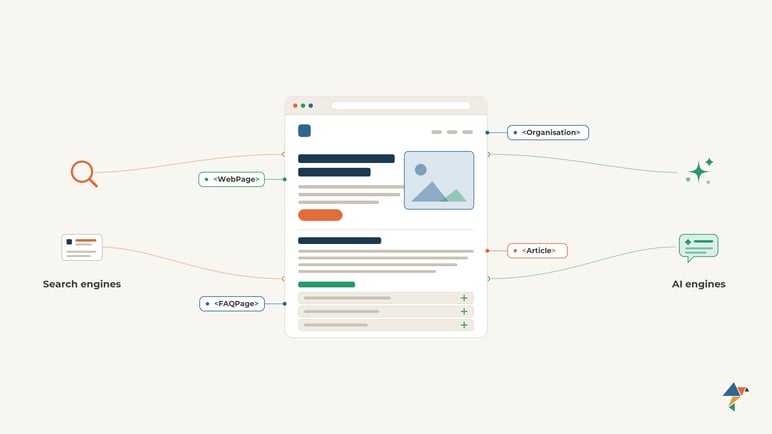
In practice, that means a few things working together on the page. Structured data, often called schema, that tells engines exactly what each page is, what the organisation does and what a service, product or course includes, rather than leaving them to infer it. Clean page structure and direct-answer formatting, so an engine can lift a clear, accurate response and attribute it to you.
Around the page, it means real technical performance, fast loading and accessibility to the crawlers the major engines run, GPTBot, ClaudeBot, PerplexityBot and Google-Extended among them, and a consistent footprint across the web, so the picture an engine holds of your business is accurate wherever it looks.
This is where a strong website build and AEO and SEO stop being separate projects. The structure that makes a site fast and easy for a person to use is the same structure that makes it readable to an engine. Done properly, this is one build, not two.
What This Looks Like in Practice
A recent build for Housing Hand, the UK's largest rent guarantor service, shows what happens when this is designed in from the start rather than bolted on afterwards. Housing Hand was repositioning its brand and needed a site that could carry a new identity across several distinct audiences, integrate cleanly with HubSpot, and be ready for a hard seasonal deadline. The rebuild was delivered on the HubSpot Content Hub platform, formerly known as HubSpot CMS, using a modern React build, with structured data implemented throughout for AEO from day one.
Read the full Housing Hand case study.
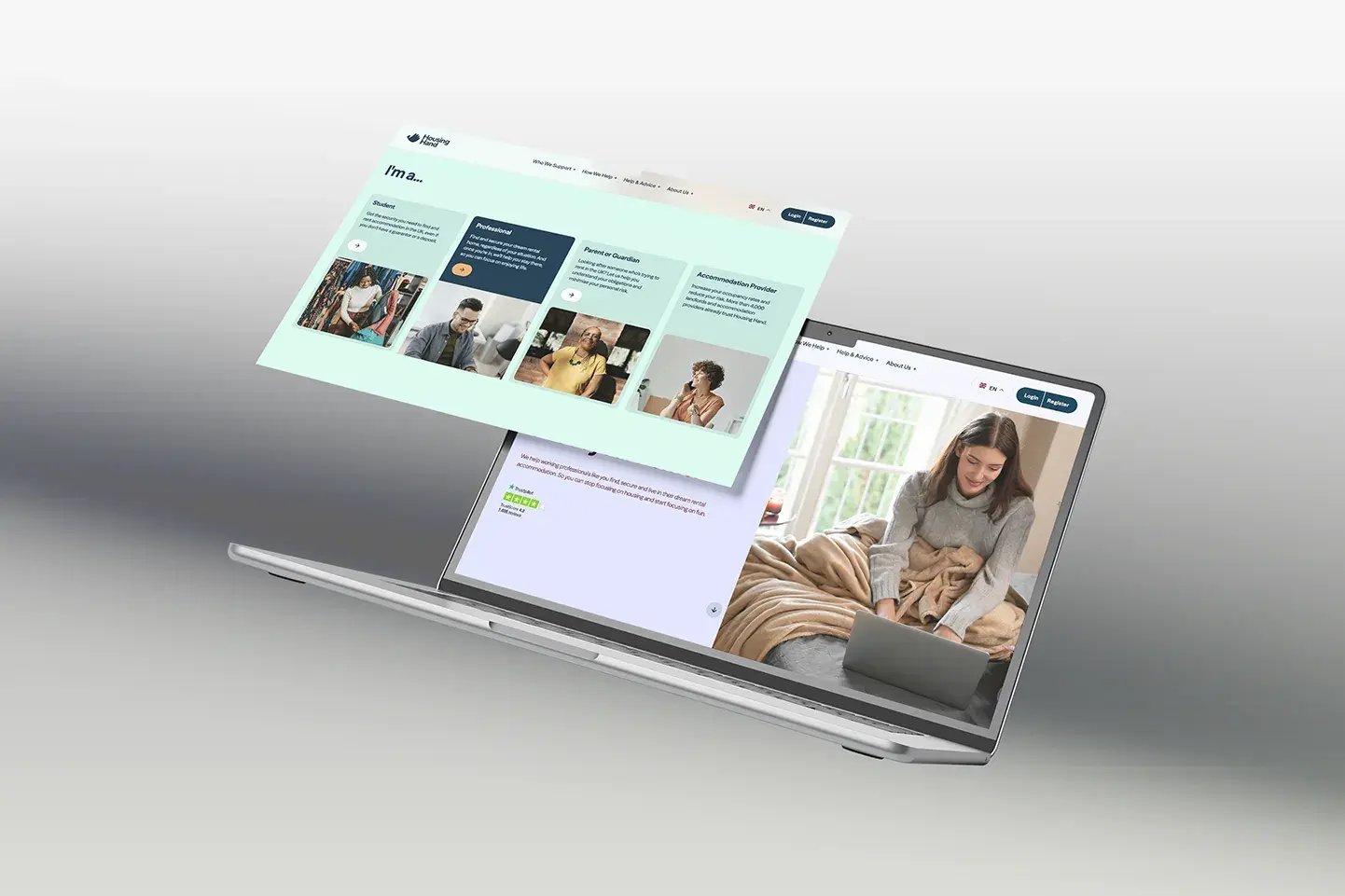
That last decision is the one that matters here. It means the site is positioned to perform in AI-driven search as well as in traditional Google results, the help centre of over 150 articles is genuinely usable for visitors who are short on time, and the marketing team can run personalisation and testing themselves without a developer involved in every change. The human experience and the engine readability were built together, in the same project, to the same specification. Neither was an afterthought.
Why This Matters Commercially
For a CEO or a marketing leader, the logic is straightforward. The buyers you want are increasingly forming their first impression of your market through an AI assistant before they ever reach a website or a sales conversation. If your business is not part of the answer they get, you are not in the consideration set. If you are part of the answer, and the site they then arrive at is fast, clear and built to convert, you win at both ends of the journey.
How To Tell Where Your Site Stands
You do not need a full audit to get a sense of this. Ask the engines directly. Put the questions your best customers would ask into ChatGPT, Claude, Perplexity and Google's AI Overviews, and see whether your business surfaces, how accurately it is described, and what it is being cited alongside. If you are absent or described poorly, that is your gap, and closing it is the work that gets you surfaced and accurately described where buyers are now looking. A more structured way to start is to map what you want your site to achieve and where it falls short today.