
Every major advertising channel started as a testing phase. When they first launched, search, social and programmatic platforms all rewarded the brands that learned early, not simply the ones that spent the most. Conversational AI is the next channel taking shape, and OpenAI has just opened paid advertising inside it with the launch of their self-serve advertising platform in May 2026. The question is whether now is the right time for your business to invest in it.
The information presented in this article is correct as of 30th July 2026. We'll update this article as new features get introduced.
A New Kind of Advertising Environment
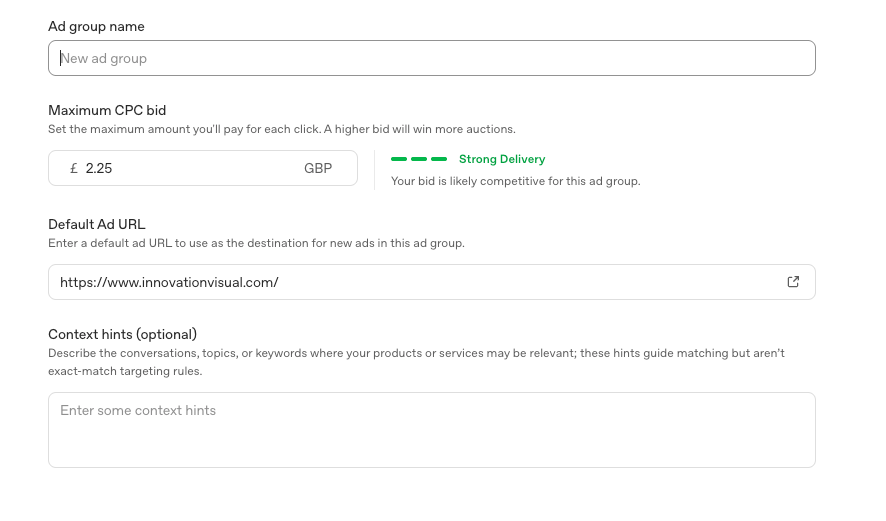
Source: OpenAI Ad Platform
Unlike traditional platforms such as Google or Meta, ChatGPT is built around conversation, which changes the advertising context considerably. That difference matters because users are often working through a decision rather than entering a simple search query.
They’re not just searching, they’re thinking out loud. They’re comparing, refining, and exploring decisions in real time. This creates a fundamentally different type of intent signal: less structured than search, but often richer and more nuanced.
ChatGPT’s current ad product reflects that early-stage thinking. Campaigns are basic (maybe deliberately) with lightweight creative formats, and broad targeting options driven by conversational context rather than detailed audience segmentation.
At this stage, it feels less like a direct challenge to Google Ads and more like the start of a different kind of advertising environment.
How Ads Actually Appear in ChatGPT
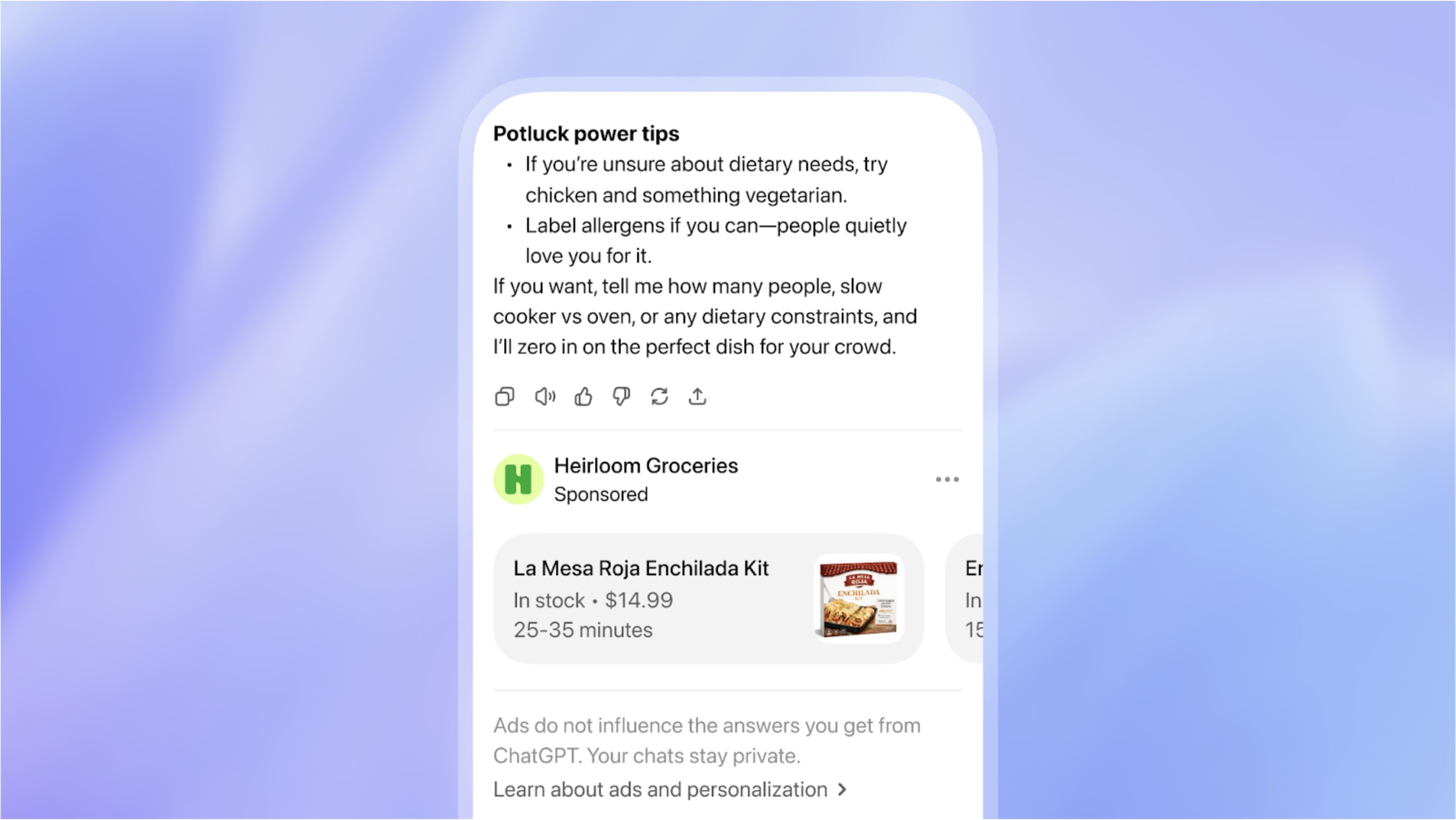
Source: ChatGPT
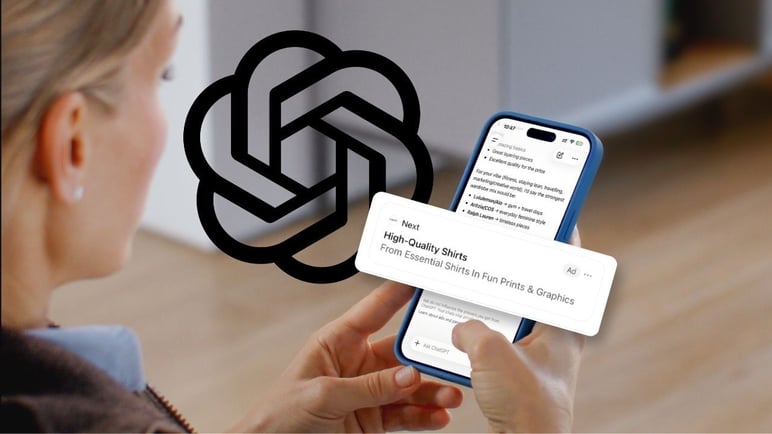
Ads currently appear directly below a completed response, clearly labelled as sponsored content and visually separated from the main answer.
This placement is intentional. It keeps the conversational flow intact while introducing a relevant commercial option once a user has finished exploring a question or problem.
The format itself is minimal:
-
A short headline and description
-
A square image or visual
-
A link through to an external landing page
There’s no interruption mid-conversation, no autoplay video, and no aggressive placement. Ads are subtle by design and feel closer to a suggested next step than a traditional advertisement.
This creates both an opportunity and a challenge. While the experience feels native and aligned with user intent, the limited visibility and creative format mean brands must work harder to capture attention and communicate value quickly.
The Early-Mover Advantage (If You Use It Correctly)
With competition still low and best practice still emerging, early adopters have a useful opportunity to build channel knowledge before the market becomes more crowded. In practice, that means experimenting with:
-
Context-driven targeting based on real-time user intent
-
Messaging tailored to in-the-moment needs
-
Creative that feels native to conversation, not interruption
Over time, this could develop into a highly effective intent-led channel because a conversation reveals more of the reasoning behind a decision than a standard keyword search does. Its future value, however, will depend on how the platform and the wider ecosystem evolve.
The potential is clear, but it is still early and far from guaranteed.
The Reality: This Is Not a Mature Channel
For all its promise, the current platform is very limited:
- Limited audience layering: you enter keywords or topics into a ‘context box’ and can layer this with uploaded audience lists
- Location targeting is very limited and only focused on country or region for the UK
- Conversion optimisation was only introduced on 24th July, before that, it was only focused on reach and clicks
- Limited creative flexibility – ads just have a headline, description and image with limited preview features
- No attribution measurement and UTM tracking was only introduced end of July
In practical terms, ChatGPT Ads should be viewed as an experimental channel rather than a core revenue driver. It can be valuable for insight and early learning, but it is not yet ready to deliver at scale.
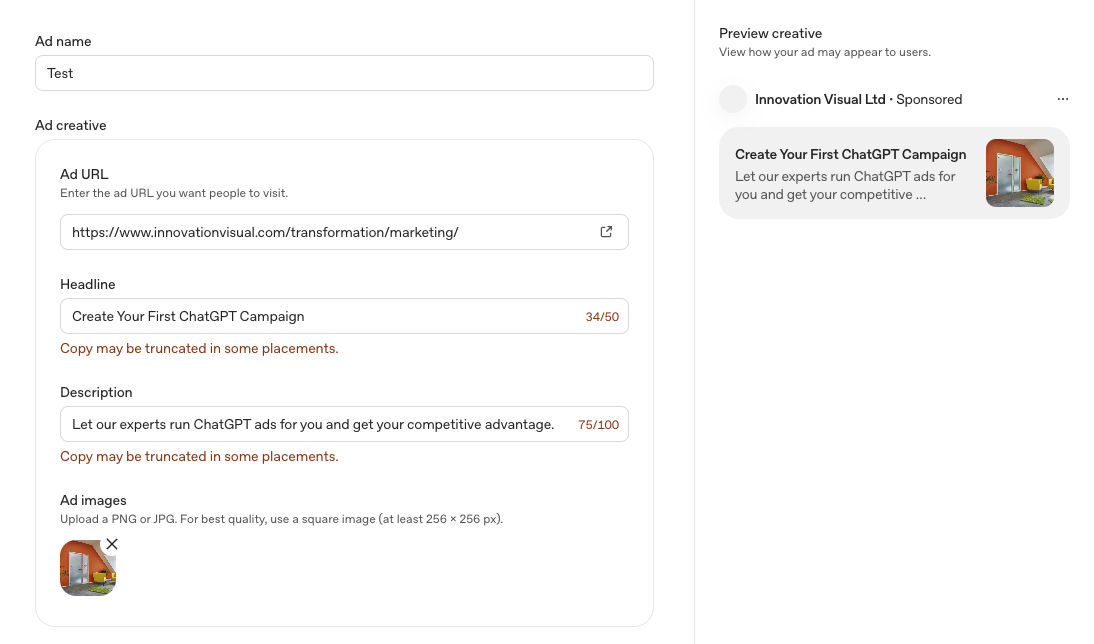
Source: OpenAI Ad Platform
Why This Matters Beyond ChatGPT
The more important question is not whether ChatGPT Ads work today. It is whether conversational AI becomes the next major digital advertising channel alongside search, social, and display.
OpenAI’s move has effectively forced the rest of the AI industry to reveal its monetisation strategy.
-
Google has not yet introduced ads directly into Gemini, but given its existing advertiser infrastructure and targeting capabilities, it is uniquely positioned to scale AI advertising quickly, and likely to make it accessible through familiar Google Ads tooling. It’s already announced ads in AI Mode as well as more AI-powered formats to be launched within search.
-
Perplexity, whose user behaviour closely mirrors search, is a natural candidate for intent-led advertising models as it matures. It’s been experimenting with advertising but paused the initiative after concerns were raised over maintaining unbiased, trustworthy search results.
-
Anthropic's Claude, by contrast, is positioning itself as a deliberately ad-free environment, a strategic bet on trust and neutrality as differentiators.
This split matters because it suggests AI monetisation will not follow a single model. Some platforms are likely to embrace advertising, while others will treat an ad-free experience as part of their value proposition.
For revenue leaders, this means your strategy needs to keep focusing on a multi-channel approach. If your audience use AI platforms, you need to be there whether ads are running or not. This reinforces the importance of understanding AEO best practices (Answer Engine Optimisation or the practice of ensuring your content is surfaced and cited by AI platforms) and tracking AI visibility so you can meet your audience where they are.
We couldn’t discuss the split in opinions about advertising in AI platform without mentioning Anthropic’s brilliant campaign against it! During the 2026 Super Bowl, in the same week ChatGPT confirmed its ad plans, Claude ran a campaign positioning itself as a space to think, free from commercial interruption. It was a deliberate signal, and a remarkably well-timed one.
What Smart Organisations Are Doing Now
The organisations most likely to benefit from this shift are not simply moving budget around. They are using this stage to learn, and that usually involves:
-
Testing ChatGPT while competition is low
-
Observing how Google integrates AI into its ad products
-
Tracking emerging players like Perplexity AI
-
Investing in visibility across AI environments (applying AEO not just paid media)
-
Building measurement frameworks that don’t rely on a single platform
This is similar to the early years of paid search and social, when the strongest performers were often the businesses that understood the channel earliest. But that window won’t stay open for long!
So, Should You Invest Early?
Yes, but with discipline. A pragmatic approach means:
-
Allocate a modest test budget
-
Focus on learning, not immediate ROI
-
Experiment with intent-led messaging and context targeting
-
Document insights and iterate quickly
The greater risk is not testing too early, but expecting immediate returns from a platform that is still finding its shape.
The Bottom Line
In its current form, ChatGPT Ads is best understood as an early signal rather than a finished opportunity. What matters is the direction of travel: conversational AI is becoming a more important interface for discovery, and advertising is likely to develop alongside it.
As the channel matures, the advantage will belong to those who already understand how to operate within it because they started learning while everyone else was waiting for proof.
The question for revenue leaders isn’t whether to bet on ChatGPT Ads today. It’s whether you can afford to wait until everyone else does.
Want to test advertising in ChatGPT the right way?
Innovation Visual can help you build the tracking infrastructure and channel framework to make your ChatGPT Ads experiments genuinely useful, generating insight you can carry into your wider multi-channel strategy as the market develops.